Assessment
Questionnaire
Have a symptom?
See what questions
a doctor would ask.
See what questions
a doctor would ask.
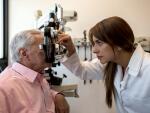
During a consultation, your doctor will use various techniques to assess the symptom: Pupil symptoms. These will include a physical examination and possibly diagnostic tests. (Note: A physical exam is always done, diagnostic tests may or may not be performed depending on the suspected condition) Your doctor will ask several questions when assessing your condition. It is important to openly share any pertinent information to help your doctor make an accurate diagnosis.
It is also very important to bring an up-to-date list of all of your all medical conditions, medications including dosages, and names of numbers of any specialist you see.
Create your printable checklist by answering questions that your doctor may ask below:
Privacy Statement
No private information is transferred over the internet. Do not use the "Browser back button", as this may cause data loss.
Why: to determine if acute or chronic.
Why: e.g. dilated pupil, constricted pupil, pupils of unequal size, pupils of unequal shape, pupil with an irregular shape, pupil that does not react to light, pupil that does not react to focusing from a near object to a far one.
Why: Bilateral pupil dilation would most likely suggest drug intoxication such as Phenobarbital, marijuana and PCP. Other possibilities include concussion and glaucoma.
Why: bilateral pupil constriction would suggest narcotic intoxication. Unilateral pupil constriction would suggest Horner's syndrome.
Why: concussion or intracranial haematoma (brain blood clot) may cause pupil dilation.
Why: e.g. iritis may cause pupil dilation or pupil constriction and may be seen in inflammatory bowel disease, ankylosing spondylitis, Reiter's syndrome, diabetes mellitus and sarcoidosis; Oculomotor nerve palsy (third cranial nerve) lesion may cause pupil dilation and may be caused by brain aneurysm, brain tumor or meningitis; Horner's syndrome may cause a unilateral pupil constriction and may be caused by cancer in the top of the lung, thyroid cancer, trauma to the neck, surgery to the neck, cluster headache, tumor of the brainstem and stroke of the brainstem.
Why: some medications may cause bilateral pupil dilation such as Phenobarbital an agent used for epileptic seizures; narcotics drugs may cause bilateral pupil constriction.
Why: e.g. marijuana and PCP may cause bilateral pupil dilation; narcotics drugs may cause bilateral pupil constriction.
Why: to help determine the risk of neurosyphilis which may cause pupil dilation.
Why: e.g. glaucoma, brain aneurysm, diabetes.
Why: Blindness associated with pupil dilation would suggest an optic nerve lesion (second cranial nerve). Impaired vision associated with pupil dilation may also suggest glaucoma or iritis. Blurring of near vision associated with a dilated pupil may suggest Homes-Adie pupil.
Why: associated with pupil dilation would suggest definite eye disease such as iritis or glaucoma.
Why: associated with pupil dilation may suggest iritis due to either ankylosing spondylitis, Reiter's syndrome or inflammatory bowel disease.
Why: may suggest meningitis, encephalitis, brain abscess or brainstem abscess.
Why: may suggest normal genetic variation, iritis, multiple sclerosis, coloboma, previous cataract surgery, neurosyphilis.
Why: partial ptosis associated with a constricted pupil would suggest a Horner's syndrome. Complete ptosis with a fixed dilated pupil would suggest a complete oculomotor (third cranial nerve) palsy.
Why: e.g. partial ptosis (dropping down of the eyelid), unilateral constricted pupil, decrease of sweating over the involved eyebrow.
The following list of conditions have 'Pupil symptoms' or similar listed as a symptom in our database. This computer-generated list may be inaccurate or incomplete. Always seek prompt professional medical advice about the cause of any symptom.
Select from the following alphabetical view of conditions which include a symptom of Pupil symptoms or choose View All.
Tools & Services:
Medical Articles:
Search Specialists by State and City
By using this site you agree to our Terms of Use. Information provided on this site is for informational purposes only; it is not intended as a substitute for advice from your own medical team. The information on this site is not to be used for diagnosing or treating any health concerns you may have - please contact your physician or health care professional for all your medical needs. Please see our Terms of Use.
Copyright © 2011 Health Grades Inc. All rights reserved. Last Update: 1 February, 2012 (3:28)